Just How Aluminum Foundry Contributes to Developments in Aerospace Engineering
Aluminum foundries are integral to advancements in aerospace engineering. They create lightweight, high-strength elements that are important for modern-day airplane. Via sophisticated casting techniques, these factories create complex geometries that improve structural stability. In addition, the growth of superior Aluminum alloys supports the sector's focus on fuel performance and sustainability. Challenges stay in the manufacturing procedure. Understanding these factors exposes the profound influence of Aluminum on aviation's future.
The Value of Lightweight Materials in Aerospace Layout
As the aerospace market remains to progress, the relevance of light-weight products ends up being progressively noticeable. The need for performance and sustainability drives engineers to focus on using products that minimize total weight without jeopardizing structural stability. Light-weight products, particularly Aluminum, play a crucial function in improving fuel effectiveness, improving payload ability, and enhancing the overall performance of aircraft.
The assimilation of these products allows for ingenious designs, enabling makers to produce even more wind resistant forms that can stand up to severe conditions. The decrease in weight not just reduces operational costs but also adds to a reduced ecological impact, lining up with worldwide initiatives toward sustainability in aviation.
Advanced Casting Techniques in Aluminum Foundries
Advanced casting strategies in Aluminum foundries play an essential function in aerospace design by allowing the manufacturing of light-weight and precise parts. Innovations in mold and mildew design and precision casting processes are essential in accomplishing excellent performance and architectural stability. Furthermore, the advancement of lightweight alloys improves the total performance and effectiveness of aerospace applications.
Innovative Mold Design
Innovative mold style plays an important function in the effectiveness and efficiency of Aluminum shops, specifically within the aerospace field. By leveraging innovative materials and techniques, modern molds can be crafted to endure heats and stress, ensuring peak efficiency throughout the casting process. These styles often include complicated geometries that enable for the manufacturing of lightweight yet structurally audio components, vital for aerospace applications. In addition, making use of computer-aided style (CAD) software application facilitates exact modeling, allowing factories to imitate and improve mold designs prior to physical production starts. This not only improves the quality of actors components yet likewise minimizes waste and preparation, bring about considerable expense financial savings. In general, cutting-edge mold and mildew style is a foundation of progression in Aluminum Foundry modern technology for aerospace design.
Accuracy Casting Processes
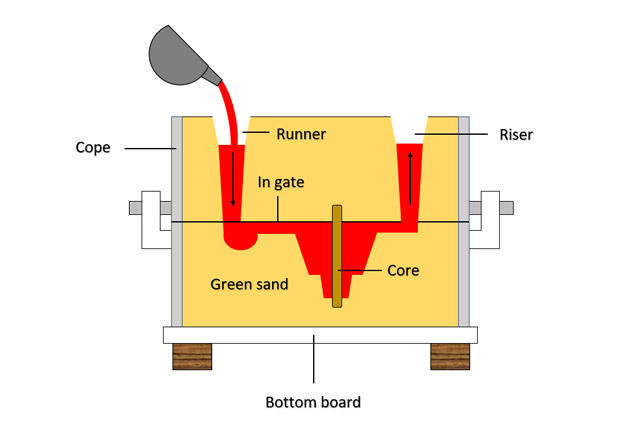
The performance of ingenious mold and mildew designs effortlessly incorporates with precision casting processes, which are important for producing high-quality Aluminum components in aerospace engineering. These procedures, consisting of sand spreading, die casting, and investment spreading, guarantee the production of intricate geometries with limited resistances. Advanced techniques like vacuum cleaner spreading and pressure pass away casting enhance the stability and surface finish of the final items. Precision spreading minimizes material waste while maximizing the mechanical residential or commercial properties of Aluminum, important for aerospace applications. On top of that, employing real-time tracking and advanced simulation tools during the spreading process permits for instant modifications, leading to improved high quality control. Jointly, these precision casting procedures setting Aluminum shops at the leading edge of aerospace innovation, supporting the industry's need for reliability and performance.
Lightweight Alloy Growth
As aerospace designers look for to improve fuel performance and performance, lightweight alloy development comes to be an important emphasis in Aluminum shops. These foundries use advanced spreading methods to produce alloys that offer superior strength-to-weight ratios. Developments in alloy composition, including the incorporation of components like lithium and magnesium, make it possible for the manufacturing of products that withstand severe problems while decreasing overall airplane weight. Methods such as die spreading and investment casting help with the accuracy production of complicated shapes, which are essential for aerospace applications. In addition, ongoing research study intends to maximize these alloys for enhanced mechanical residential or commercial properties and raised longevity. By focusing on light-weight alloy growth, Aluminum shops substantially add to the development of aerospace design, leading the way for a lot more effective and sustainable aircraft layouts.
Enhancing Structural Integrity Through Aluminum Components
Aluminum parts provide considerable benefits in improving structural honesty within aerospace design. Their lightweight nature contributes to general performance while preserving stamina, which is important for aircraft efficiency. In addition, the tension resistance properties of Aluminum assistance assure the toughness and integrity of aerospace frameworks under numerous operational conditions.
Lightweight Product Benefits
While standard products often endanger weight for strength, using Aluminum components in aerospace design provides substantial benefits in architectural stability. Aluminum's lightweight nature contributes to overall design performance, enabling even more structured airplane that take in less fuel, consequently improving sustainability. The material's superb strength-to-weight proportion assurances that elements keep durability without adding unnecessary mass. This high quality fosters improved performance and dexterity in flight, as well as maximized haul capabilities. Furthermore, Aluminum's resistance to deterioration extends the life-span of aerospace frameworks, minimizing maintenance prices and boosting safety. As producers increasingly embrace Aluminum alloys, the aerospace market experiences a transformative shift towards more effective and efficient engineering remedies that prioritize both efficiency and ecological responsibility.
Anxiety Resistance Qualities
Numerous products have one-of-a-kind residential properties, Aluminum's phenomenal tension resistance stands out as an important aspect in enhancing the architectural honesty of aerospace parts. This resistance plays an essential duty in making certain that aircraft can endure numerous operational anxieties, including fatigue, effect, and ecological problems. Aluminum alloys, especially crafted for aerospace applications, show high tensile strength while preserving lightweight characteristics, making it possible for designers to create a lot more reliable structures - Aluminum Foundry. Furthermore, the capacity of Aluminum to endure cyclic loading without considerable deformation adds to the longevity and integrity of aerospace components. As advancements continue in Aluminum Foundry strategies, the growth of stress-resistant Aluminum parts guarantees additional renovations in efficiency, safety, and effectiveness throughout the aerospace sector, solidifying Aluminum's duty as a preferred material in modern engineering
Gas Effectiveness Improvements Driven by Aluminum Innovations
As the aerospace market looks for to boost gas effectiveness, cutting-edge uses Aluminum have emerged as an important service. Aluminum's light-weight nature especially reduces aircraft weight, enabling lower gas intake throughout trip. This decrease in weight is vital, as even small decreases can bring about substantial enhancements in total gas economy.
Advanced Aluminum alloys, developed for improved stamina and sturdiness, make it possible for makers to create elements that keep structural integrity while lessening mass - Aluminum Foundry. In addition, the combination of Aluminum in airframes and engine parts helps with improved aerodynamics, why not check here adding to lowered drag and boosted effectiveness
The adoption of Aluminum in aerospace not only meets the need for fuel-efficient design yet also lines up with regulative pressures for reduced emissions. As these technologies proceed to progress, they play a considerable function in establishing new standards for gas effectiveness, making certain that the aerospace market can satisfy growing economic and ecological challenges.

The Role of Aluminum in Sustainable Air Travel Practices
The increasing emphasis on lasting air travel practices has positioned Aluminum as a crucial product in the pursuit for greener airplane design. Understood for its lightweight residential properties, Aluminum substantially lowers airplane weight, resulting in lower fuel usage and emissions. Its recyclability further enhances its sustainability account, as Aluminum can be recycled forever without loss of top quality. This particular sustains a round economic situation within the aviation sector, decreasing waste and resource deficiency.
Developments in Aluminum alloys have actually boosted their strength and corrosion resistance, allowing for longer solution life and lowered maintenance demands. These technologies facilitate the advancement of a lot more effective airplane structures, adding to overall sustainability initiatives. In addition, Aluminum's thermal conductivity plays an essential role in energy-efficient layouts, boosting systems such as heat exchangers. Jointly, these qualities underscore Aluminum's pivotal function ahead of time lasting air travel, lining up with global efforts focused on reducing the ecological impact of air travel.
Obstacles Faced by Aluminum Foundries in Aerospace Manufacturing
While Aluminum shops play an essential function in aerospace production, they deal with considerable challenges that can impact production performance and top quality. One significant difficulty is the rigid quality assurance requirements called for in the aerospace industry. Any kind of issue can endanger safety and security and efficiency, demanding strenuous inspection procedures that extend manufacturing timelines. In addition, foundries typically contend with fluctuating raw product prices, which can impact rates and earnings. The complexity of Aluminum alloys made use of in aerospace applications additional makes complex the manufacturing process, as exact solutions are essential for accomplishing wanted mechanical homes. In addition, knowledgeable labor shortages hinder the capability to keep premium production degrees. Environmental guidelines impose constraints on discharges and waste monitoring, calling for factories to invest in sustainable practices, which can be cost-prohibitive. These factors jointly develop a landscape where Aluminum foundries must continuously adapt to fulfill the progressing needs of aerospace manufacturing while making sure security and conformity.
Future Patterns in Aluminum Applications for Aerospace Engineering
With improvements in innovation and enhancing needs for efficiency, the future of Aluminum applications in aerospace design is positioned for substantial transformation. The combination of innovative Aluminum alloys and compounds Full Article is expected to boost strength-to-weight ratios, bring about even more fuel-efficient airplane designs. In enhancement, improvements in additive manufacturing methods will certainly permit the production of intricate Aluminum frameworks that were previously impossible, optimizing efficiency and decreasing waste.

Sustainable techniques will play an important role, with an expanding focus on reusing Aluminum to minimize environmental effect. The aerospace market is most likely to welcome smarter producing processes, such as automation and expert system, ensuring better and accuracy in Aluminum parts. Partnerships in between Aluminum foundries and aerospace companies will promote research and advancement, leading the method for new applications that fulfill the stringent requirements of modern-day aerospace design. On the whole, the future looks guaranteeing for Aluminum's duty fit the skies
Frequently Asked Concerns
What Are the Ecological Influences of Aluminum Manufacturing in Aerospace?
The environmental effects of Aluminum production in aerospace consist of considerable power intake, greenhouse gas exhausts, and environment disturbance. Additionally, mining processes can lead to soil destruction and water contamination, elevating problems about sustainability and ecological balance.
Exactly How Does Aluminum Compare to Various Other Products in Aerospace Applications?
Aluminum supplies an one-of-a-kind combination of light-weight homes, rust resistance, and cost-effectiveness contrasted to various other products. Its high strength-to-weight ratio makes it specifically beneficial for aerospace applications, enhancing gas efficiency and general efficiency in aircraft design.
What Qualifications Do Aluminum Foundry Workers Requirement for Aerospace Projects?
Aluminum Foundry workers call for specific training in metallurgy and casting strategies, in addition to knowledge of aerospace industry requirements. Qualifications in top quality control and security procedures are also vital to guarantee compliance with strict aerospace project requirements.
Are There Any Security Concerns With Using Aluminum in Aerospace Engineering?
Security concerns concerning Aluminum in aerospace design include sensitivity to anxiety, corrosion, and fatigue cracks. Appropriate therapy and alloy option are necessary to minimize these risks, ensuring architectural integrity and total safety and security in aerospace applications.
Just How Does Aluminum Recycling Advantage the Aerospace Sector?
Aluminum reusing substantially benefits the aerospace industry by reducing product prices, lessening ecological effect, and saving energy. This sustainable technique improves the market's effectiveness while advertising using light-weight, high-performance components in airplane manufacturing.
Advanced spreading methods in Aluminum shops play a vital role in aerospace design by enabling the manufacturing of precise and lightweight parts. Ingenious mold design plays an important duty in the efficiency and efficiency of Aluminum foundries, specifically within the aerospace market. As aerospace designers seek to enhance fuel efficiency and efficiency, lightweight alloy growth becomes a necessary focus in Aluminum factories. Aluminum alloys, especially crafted for aerospace applications, exhibit high tensile toughness while preserving lightweight attributes, making it possible for designers to develop a lot more anonymous efficient structures. Partnerships between Aluminum factories and aerospace companies will cultivate research and growth, paving the means for brand-new applications that meet the stringent requirements of modern-day aerospace design.